The art of building sustainably for future generations.
20 Years of Sustainable Construction
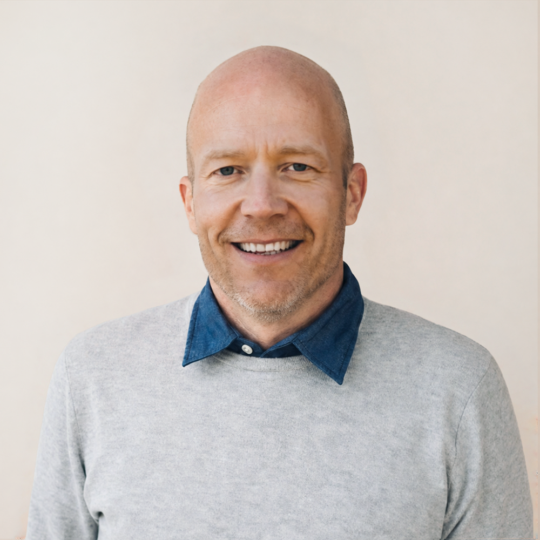
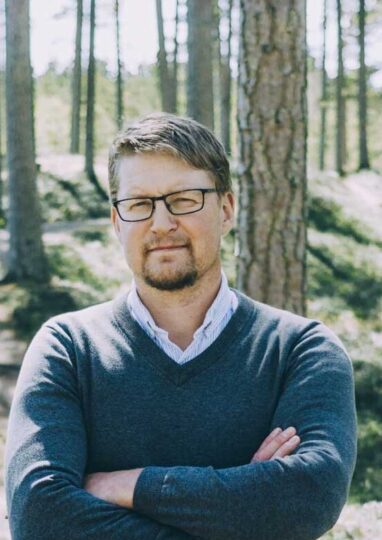
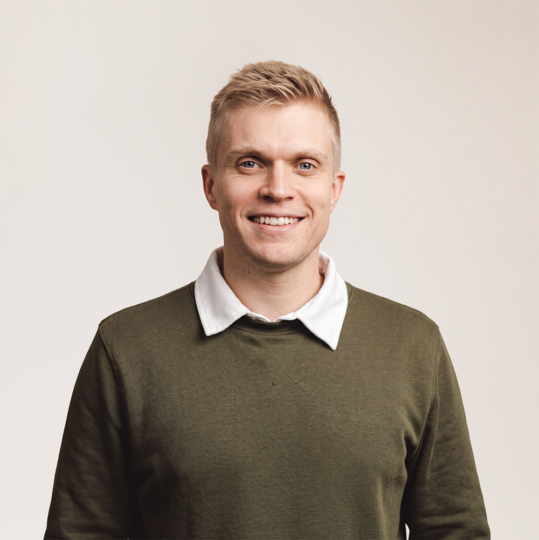
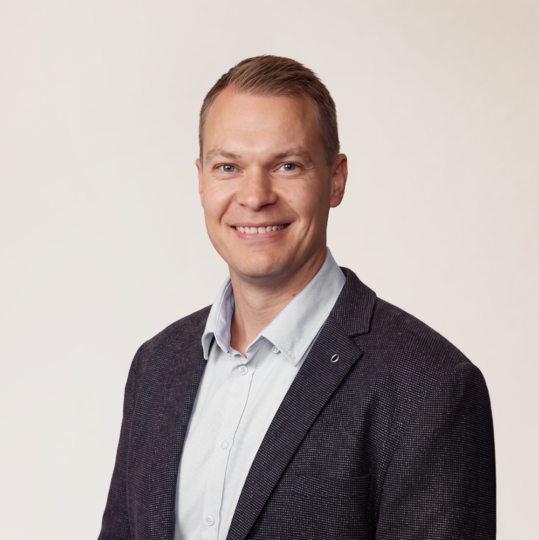
The name “Jake” is formed from the initials of Johan and Jonny, combined with the first two letters of Kenneth’s first name.
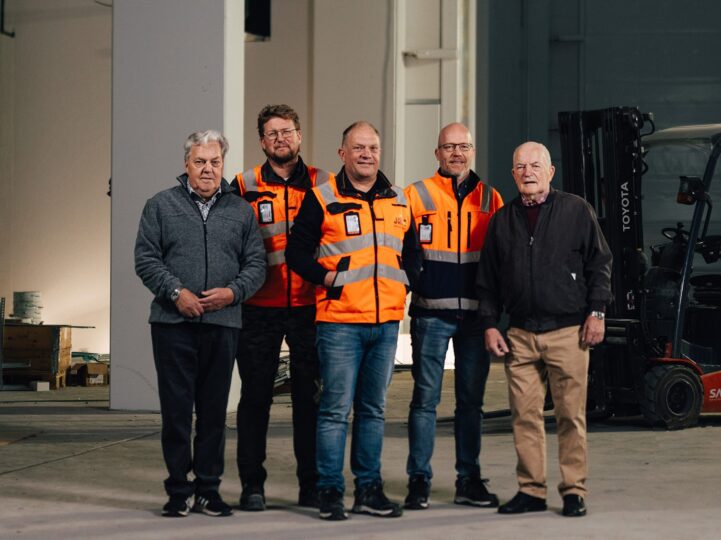
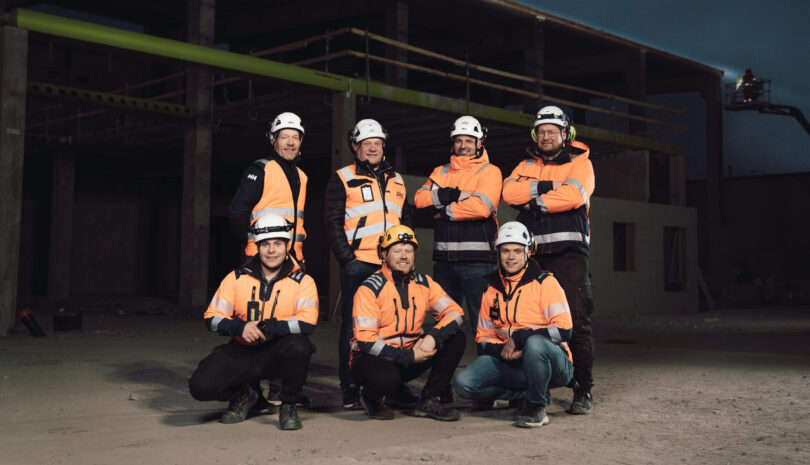
From the left in the picture: Torolf Asplund, Kenneth Asplund, Johan Asplund, Jonny Asplund ja Kaj Asplund.
The beginning
The Foundation & Entrepreneurial Inception
Brothers Johan and Jonny Asplund grew up with solar panels installed on their roof—a highly unusual sight in Pietarsaari during the early 1980s. They didn’t realize back then that their father Kaj’s passionate interest in technical innovation would become a core driving factor in their own professional paths. Their cousin Kenneth Asplund was raised with a similar innovative spirit. In his father Torolf’s carpentry shop, he closely witnessed the technical development of an automatic lathe that was entirely unique for its time.
Johan trained in construction and was just 20 years old when he launched his very first building enterprise in 1988. In the mid-1990s, he secured major contracts within the food processing industry at Snellman, where he began collaborating with Kenneth, who was also running his own independent contracting business.
“That period provided incredible field experience and built an exceptional foundation for our future. We are profoundly grateful for the professional guidance we received from our project manager, Sven Åkerlund,” notes Johan Asplund.
In 2003, Johan and Jonny formed their joint construction business, and in 2005 they formally merged operations with Kenneth’s firm, establishing Jake Rakennus Bygg. Over 20 years have passed since inception, and all three founding owners remain fully active, working operationally within the business today. The corporate turnover reached nearly €20 million.
“Kenneth is exceptionally talented at managing major construction sites, identifying both risks and opportunities early so we can adapt in time. In our industry, a single unaddressed detail can have massive financial consequences. Jonny’s core strengths tie into technical sales, advanced building engineering, and corporate finance—a vital combination for full turnkey operations,” states Johan Asplund.
Johan’s comprehensive execution experience brings significant advantages throughout the construction cycle, particularly in planning, material selection, and overall project strategy. This deep experience provides the confidence needed to break away from traditional habits and pioneer new approaches.
“Looking at our position today, it’s clear that we three principal owners complement each other perfectly,” concludes Johan Asplund, CEO.
Years 2003–2007
Building a Financial Foundation Through Residential Construction
During its first five years, the company focused on residential production, building single-family homes and duplexes. The owners avoided undue financial risks, prioritizing a highly stable baseline economy for the firm. In practice, Johan and Kenneth managed site building by day, and Johan handled the administrative corporate duties from home at night. Every single cent was tracked, and the active material inventory was moved around in vehicles and trailers.
“From that era, I vividly remember the incredible feeling when we successfully pre-sold half of the apartments at the Östanpåfjärden project in Pietarsaari. We had purchased that land using borrowed capital to build six duplex units. It was a million-euro project, which felt massive for us back then,” shares Johan Asplund.
At this stage, Jonny Asplund was not yet working operationally within the firm. He had graduated as an HVAC engineer and was working with Scancool (acquired by Oilon in 2011) in Kokkola until late 2014, when he joined Jake full-time.
In 2004, André Mård began working with the company during summers and evenings. Starting in 2005, Johan’s sons Ronnie and Tobias Asplund joined as site assistants, handling post-construction cleaning during breaks and after hours. All three continue to work at Jake today as operational co-owners.
Years 2008 – 2013
Scaling Ambitions and Structural Heights
Following its first five years, the firm experienced a massive operational shift when it formulated its first structured five-year growth strategy in 2008, working with external board member Asko Lamminen as a strategic mentor. The business grew rapidly, venturing heavily into developer-driven residential projects despite complex legal frameworks. André Mård took on the challenge of masterfully navigating the strict financial and legal documentation required. Nearing the completion of his civil engineering studies in 2011, André authored his thesis on developer-driven residential construction, which resulted in a comprehensive manual for managing RS legal documentation before breaking ground. This material serves as an active Swedish-language training resource across Finland.
“A family typically buys a home based purely on conceptual blueprints, making structured milestone payments to the builder as construction advances. If the legal RS framework isn’t managed perfectly and the contractor fails to deliver, the family faces catastrophic personal financial risk. That’s why we chose to master this compliance process early on, despite our size. We successfully protected our homebuyers through flawless execution,” states Jonny Asplund.
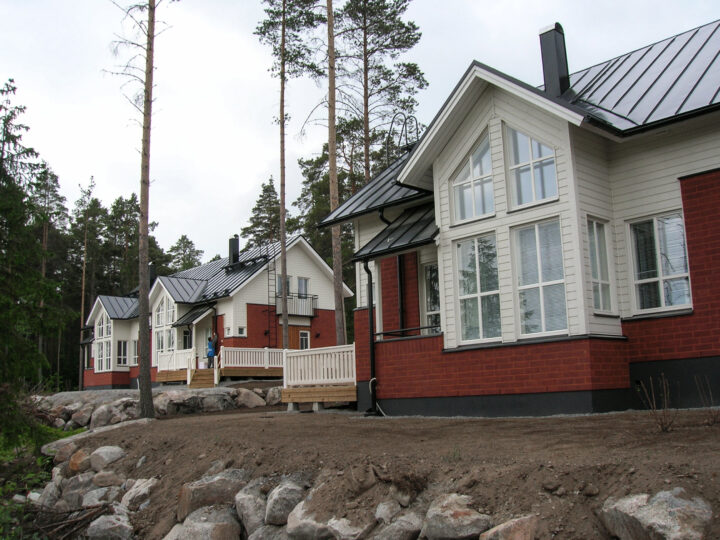
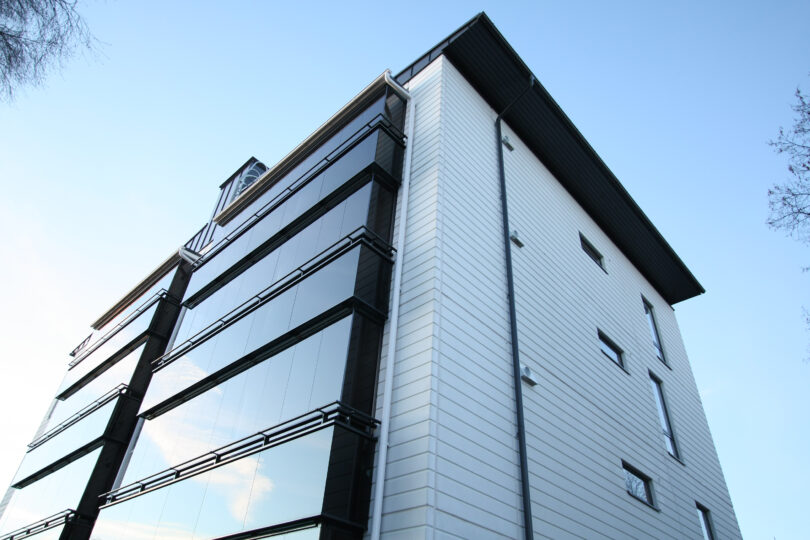
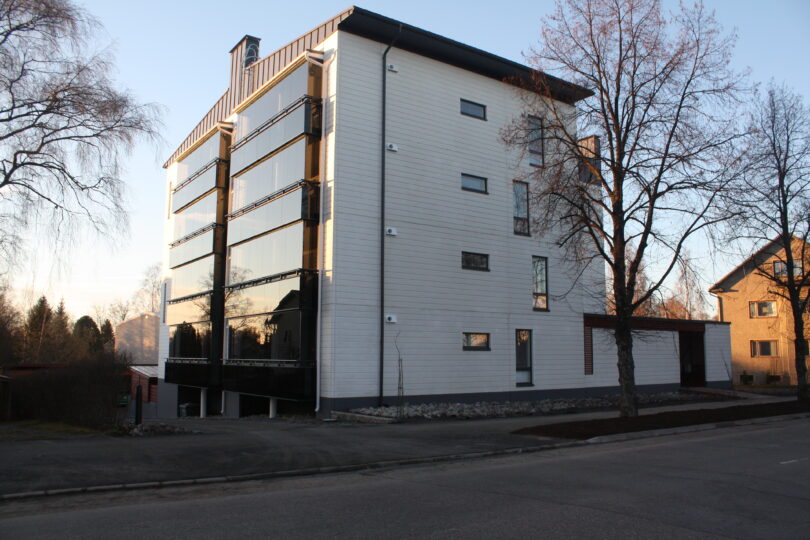
During this period, the buildings grew substantially higher alongside corporate ambitions. Backed by their board and external mentors, the partners systematically took on larger contracts. A defining milestone was the construction of the multi-story residential building in Mäntykangas, Kokkola, completed in 2011.
“In 2006, I connected with Matti Leskelä, who was leading real estate brokerage sales for OP Bank in Kokkola. He believed in our capabilities and served as a crucial pillar for our residential sales over many successful years in that market,” notes Johan Asplund.
Another vital mentor was seasoned contractor Pekka Kaipainen, from whom the company purchased the Mäntykangas land package in 2009; he has provided expert external consulting to the firm ever since.
Years 2014 – 2018
Establishing a Reputation as Industrial Innovators
A major milestone during this period was MyNest—a digital service logbook for residential construction launched by Jake Rakennus in 2013. Developed with the support of their tech-savvy board member Asko Lamminen, it was a highly innovative solution for its time. MyNest received mixed reactions in the industry; while mostly positive, the company did weather a few skeptical remarks from traditionalists.
“MyNest is still actively used in our construction projects and by external parties. While the service might not have achieved the massive industry-wide breakthrough we initially hoped for, it taught us the immense value of staying one step ahead. MyNest was a major reason why Jake Rakennus began to be recognized as an innovator in the construction sector,” says Jonny Asplund.
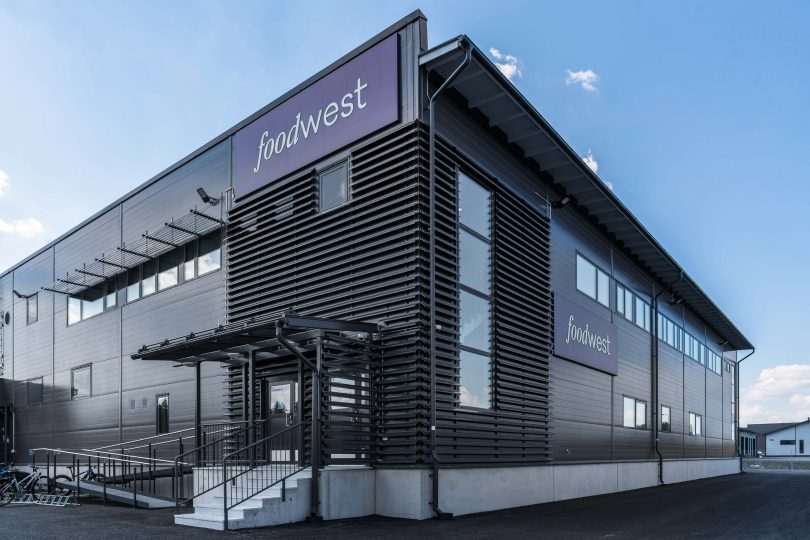
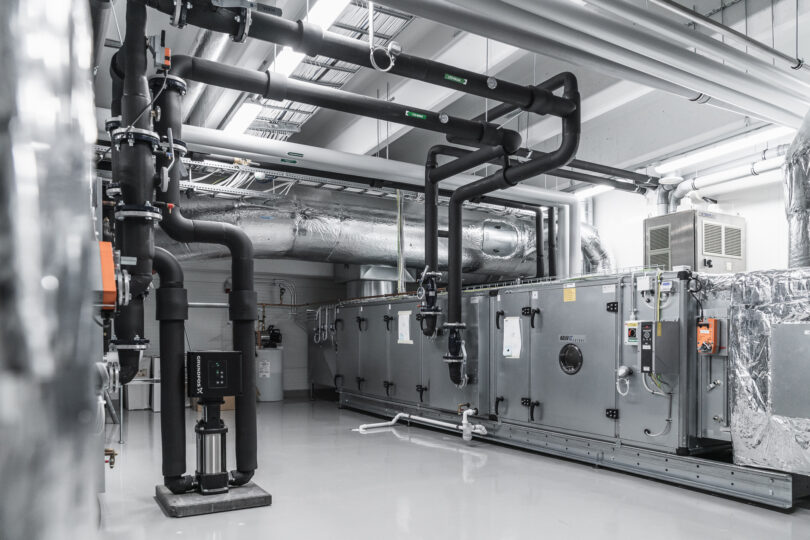
With ten years of experience under its belt, Jake Rakennus felt confident enough to pivot from residential builds to light industry and public sector projects. The transition was natural, given the owners’ previous background with food industry facilities. By early 2015, Jonny Asplund was working operatively in the company, bringing extensive expertise in HVAC and refrigeration solutions tailored to the food industry. This positioned Jake Rakennus perfectly to secure a million-euro project in Seinäjoki in 2018: building brand-new facilities for the food development company Foodwest.
“Ramboll called us out of the blue to ask if we would take on the contract. They had recognized that we possessed the combined construction and building services expertise required to execute this type of turnkey, total responsibility project. Winning that contract truly proved to us that we were on the right track,” notes Jonny Asplund.
Because the project was based in Seinäjoki, Jake Rakennus expanded its geographical footprint, bringing its trusted network of subcontractors well outside the familiar borders of Ostrobothnia. Johan Asplund smiles at the memory.
“It was certainly out of our comfort zone, and out of the client’s comfort zone in Seinäjoki, too. At our first meeting, they openly sighed at our very Swedish-sounding Ostrobothnian surnames: Asplund, Mård, Björkskog, and Granholm. But the final result was exceptional, and that project gave other companies in the food industry the confidence to hire us for their new builds,” he says.
In 2018, Jake Rakennus made a conscious decision to clearly profile itself as the environmentally conscious construction company it had already organically become. The company formulated its clear vision: to become a Nordic pioneer in sustainable construction across the industrial, public, and residential sectors. This vision and strategy were developed in collaboration with the digital marketing agency Genero, which launched Jake Rakennus’s updated website that same year.
“In our strategic work, Tom Niemi from Kokkola has served as a valuable mentor and board consultant since 2019. He brings deep expertise from the mining and metallurgy industries, which has been highly beneficial to us. Without the mentors we’ve had over the years, we would never have made it this far,” says Johan Asplund.
Years 2019–2023
Pioneers in Sustainable Construction
Jake Rakennus was an early adopter of mass timber and engineered wood, and Johan Asplund remembers when they first proposed utilizing a CLT (Cross-Laminated Timber) element entrance for a freight logistics warehouse they were contracted to build for Adolf Lahti Oy in Kokkola.
“It was a bit nerve-wracking to present the idea, but when the CEO enthusiastically replied, ‘Wow, interesting!’, it confirmed that our thinking was right. Our focus on sustainable materials and energy-efficient building services solutions has brought us many highly interesting projects over the past few years,” says Johan Asplund.
Among these is Fresh Servant in Pedersöre, who hired Jake Rakennus in 2021 to expand their salad production facility from 8,000 to 15,000 square meters. The project was executed as a turnkey (KVR) contract, meaning Jake Rakennus took full responsibility for the engineering, construction, and building services. The total investment value was around 25 million euros, with construction costs accounting for roughly a third. This showcases the scale of industrial projects Jake Rakennus routinely delivers today.
In 2019, the next generation officially stepped into ownership when Johan Asplund’s sons, Ronnie and Tobias, became co-owners. A few years later, the ownership base was expanded further to include André Mård and Jens Mård.
“We are proud that the younger generation wants to commit as co-owners; it allows the company to continue growing. With younger partners on board, I also hope we can attract new talent so we can maintain and expand our broad knowledge base. We are taking on increasingly large projects and will need more project managers and skilled builders,” says Johan Asplund.
Ronnie Asplund is a professional builder who has worked full-time at Jake Rakennus since 2012. He became a co-owner in 2019 and has been studying for his civil engineering degree alongside his work since autumn 2022.
Tobias Asplund is an electrical/automation assembler and automation engineer. He became a partner in 2019 and stepped into an operative role in 2021 as the Regional Manager for Vaasa.uepäällikkö.
André Mård began working at Jake Rakennus while studying to be a builder. He accepted a permanent role in 2011 upon graduating as a civil engineer and has worked as a Site Manager ever since. André became a co-owner in 2022.
Jens Mård joined Jake Rakennus in 2017 as a cost estimator in sales. He transitioned to a permanent role in 2018 after completing his civil engineering studies and became a Site Manager in 2020. Jens became a co-owner in 2022.
Jake Today
Specialists in Low-Carbon Construction
While Jake Rakennus still builds residential properties—primarily timber-framed apartment buildings—the vast majority of the company’s revenue now comes from commercial, industrial, and public contracts across Ostrobothnia and Central Ostrobothnia. Jake Rakennus has specialized in constructing facilities with low lifecycle costs for the industrial and public sectors. Many projects are executed as turnkey EPC (Engineering, Procurement, and Construction) contracts, where Jake Rakennus manages everything from design and procurement to final construction and building services.
There is a distinct surge in demand for low-carbon construction in both industrial and public sectors. Low-carbon building is a core pillar of sustainable development and the green transition. By reducing carbon emissions and minimizing negative environmental impacts, the construction sector plays a massive role in shrinking humanity’s total climate footprint.
Source: Ympäristöministeriön verkkosivut: https://ym.fi/vahahiilinen-rakentaminen
“Construction and buildings account for roughly one-third of Finland’s greenhouse gas emissions. For Finland to meet its national and international climate targets, emissions from the built environment must decrease. Monitoring energy consumption during a building’s operational life is no longer enough; we must account for the carbon footprint across the building’s entire lifecycle.”
Technical Definition: What Constitutes Low-Carbon Construction?
Low-carbon engineering focuses on minimizing greenhouse gas emissions and environmental degradation across both the initial construction cycle and the facility’s multi-decade operational lifespan. The core goal is to deliver spaces that are highly resource-efficient, energy-optimized, and climate-resilient.
How Do We Build Low-Carbon Structures?
Material Optimization
Utilizing recycled, bio-based, or low-carbon alternatives such as structural mass timber instead of conventional carbon-heavy concrete and standard steel processing. Standard concrete and steel processing generate massive volumes of global carbon emissions during manufacturing.
Energy Efficiency
Designing structures to minimize energy demands by using high-grade insulation, energy-efficient windows and doors, passive solar heating, and natural ventilation systems.
Renewables Integration
Incorporating clean energy systems such as solar arrays, wind power, or geothermal heating to supply the facility with sustainable energy.
Waste Mitigation
Reducing on-site waste by utilizing prefabricated materials and modular components, alongside rigorous recycling and material reuse practices.
Logistical Sourcing
Optimizing the building’s location to reduce logistics and transport emissions while ensuring easy access to public transit networks.
Water Management Systems
Implementing water-saving technologies, rainwater harvesting, and greywater recycling systems to decrease overall consumption.
Lifecycle Assessment (LCA)
Utilizing comprehensive lifecycle assessments to evaluate a building’s environmental impact from material extraction and construction through to operations and eventual decommissioning.

Jake in the Future
The Next Step: Green Concrete
To maintain its position as a pioneer in sustainable construction, Jake Rakennus continuously monitors emerging materials and technologies. Kenneth Asplund is currently spearheading research into integrating green concrete into upcoming projects.
“Traditional concrete relies heavily on cement, and cement manufacturing is a massive source of global carbon emissions. By replacing a portion of the cement with blast-furnace slag or fly ash, the carbon emissions of the concrete can be effectively cut in half,” Kenneth Asplund explains.
Green concrete meets the exact same strict performance criteria as traditional concrete regarding durability, strength, lifecycle, and pourability.
“The curing time is affected because green concrete doesn’t generate heat and energy the same way pure cement does, so we must adjust our schedules accordingly. But we are absolutely bringing green concrete into Jake Rakennus’s standard practices—it is a low-carbon material that will heavily reduce a building’s overall climate impact,” says Kenneth.
Jake in a Nutshell:
- Founded: 2003 by Johan and Jonny Asplund. Kenneth Asplund became a partner in 2005.
- Team: 7 co-owners, 22 in-house employees, and an extensive network of specialized subcontractors.
- Turnover: Approximately €16 million in 2022, reaching nearly €20 million in 2023.
- Operating Area: Primarily between Kokkola and Kristinestad.
- Project Split: 80% industrial/commercial/public contracting, 20% residential development.
- Offices: Headquartered at Barrvägen 3 in Jakobstad, with a regional office at Mjölnaregatan 21 (Klemetsö) in Vaasa.
Do you share our commitment to sustainable construction?
Get in touch today to request a quote or discuss your project!